

- Profile
- Veterinary and sanitary expertise of raw materials and products of animal and plant origin
Veterinary and Sanitary Expertise
Entrance examinations

The organization conducts entrance examinations in person and (or) using distance technologies (subject to the identification of applicants in passing their entrance examinations).
Schedule of entrance examinations
Course duration and fees
Tuition-free studying
Places available
- Full-time studying – 20;
- Part-time studying – 15.
Duration of the course
- Full-time studying – 4 years;
- Part-time studying – 5 years.
Full-fee studying
Places available
- Full-time studying – 10;
- Part-time studying – 5.
Duration of the course
- Full-time studying – 4 years;
- Part-time studying – 5 years.
Tuition per year (2023)
- Full-time studying – 45 000 to 80 000;
- Part-time studying – 45 000 to 80 000.
During your studies you will obtain
Essential skills
- conduct veterinary and sanitary examination of raw materials and slaughter products of animal origin;
- organize, plan and control veterinary and sanitary measures for disinfection, disinsection, disinvasion, deratization and decontamination in enterprises for processing raw materials and products of animal origin and veterinary oversight facilities;
- to use regulatory and technical documents on veterinary and sanitary measures;
- veterinary and sanitary control at processing plants aimed at ensuring the safety of humans and animals from diseases transmitted through slaughter products and environmental protection; control the implementation of veterinary and sanitary measures;
- veterinary and sanitary control over quality of raw materials of animal and plant origin, technology of feed production for agricultural, domestic animals and birds;
- carry out state veterinary and sanitary control in export-import operations.
Material and technical base
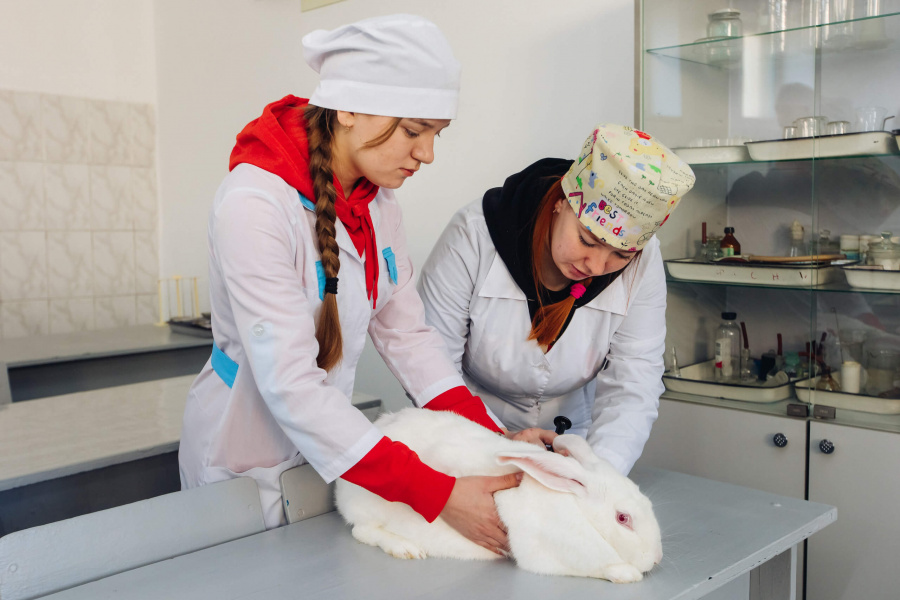
- At the Faculty of Veterinary Medicine for the direction 36.03.01 Veterinary and sanitary expertise are involved in the educational process four departments: "VSE, microbiology and pathomorphology", "Anatomy, physiology, pharmacology", "Therapy, clinical diagnostics, obstetrics and biotechnology", "Parasitology, epizootology and surgery";
- at the department "VSE, microbiology and pathomorphology" there are 6 classrooms for laboratory-practical lessons, 1 lecture room. There are stands, microscopes, thermostat, refrigerators, educational furniture.

Future career
After graduation, you will be able to work as
- a veterinary and sanitary expert;
- an expert of laboratory control in the field of veterinary medicine;
- the head of a laboratory of veterinary and sanitary expertise;
- the head of a veterinary laboratory.

Our Partners